Young Kiwi scientist uses physics to navigate a complex world
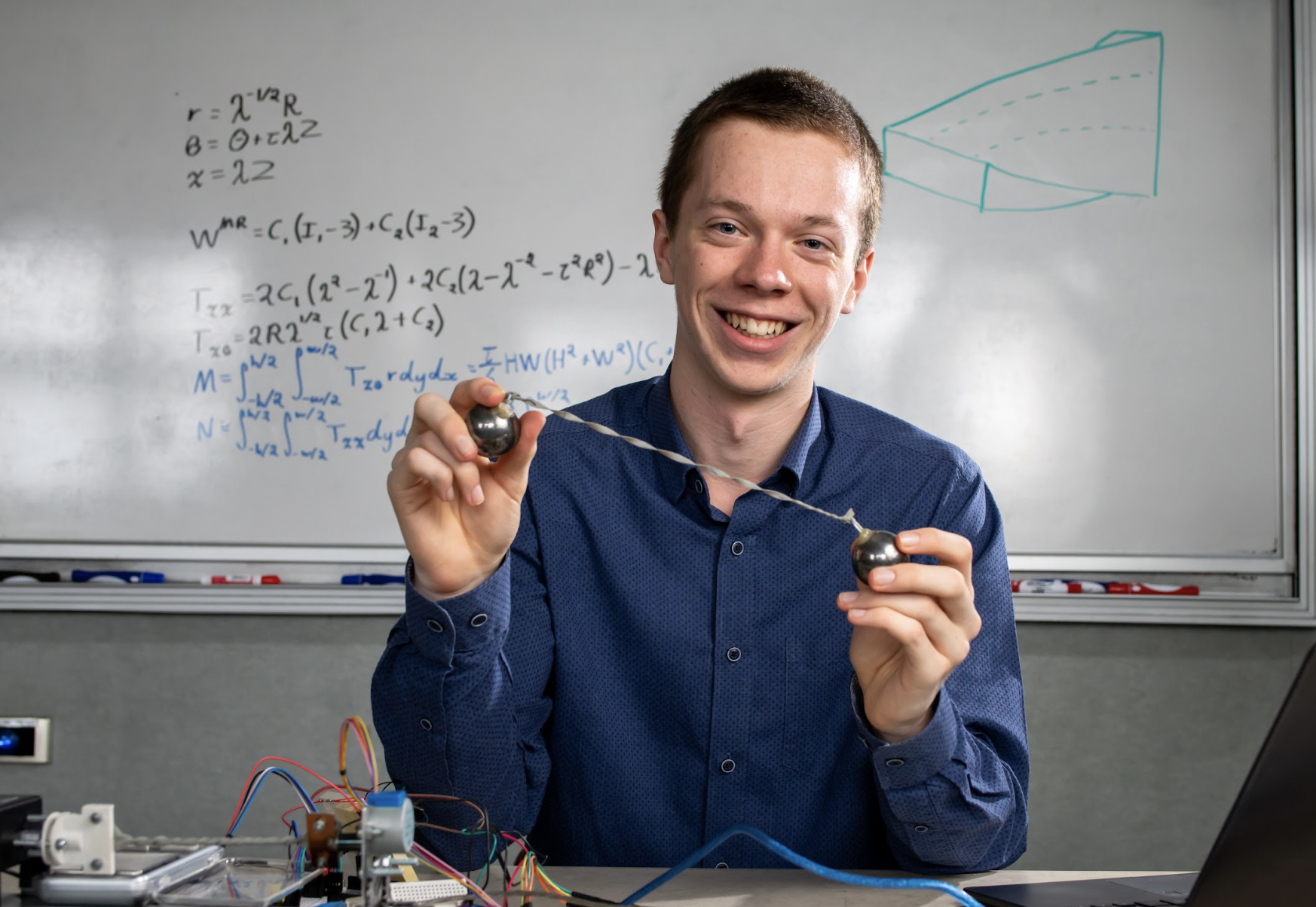
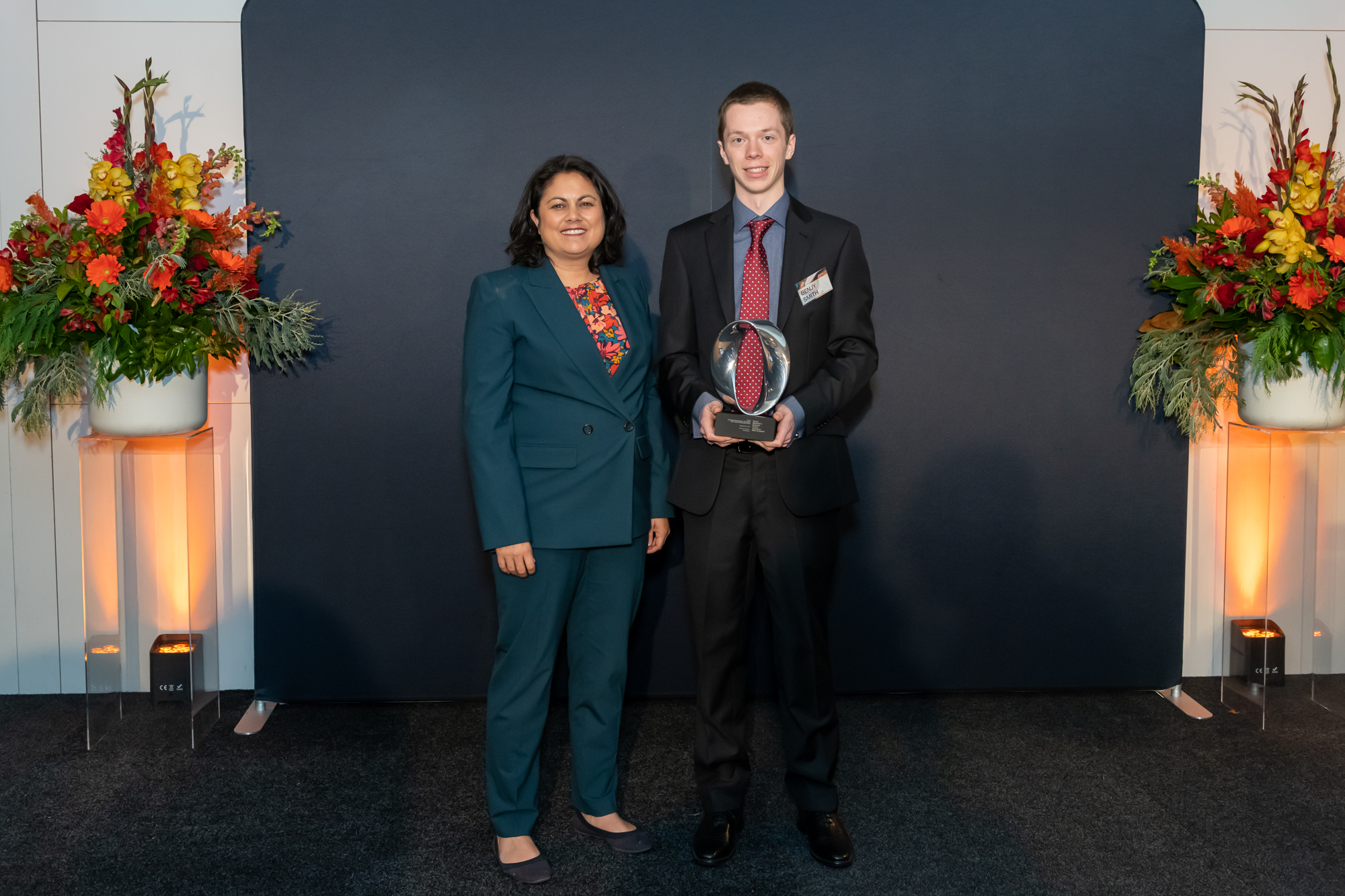
Benjamin Smith has been joining local and international physics competitions since his first year in high school. As a senior at Onslow College in Wellington, Benjamin Smith joined the New Zealand team that competed in the online International Young Physicists’ Tournament (OYPT). Later that year, he was named New Zealand’s 2022 Prime Minister’s Te Puiaki Kaipūtaiao Ānamata Future Scientist. Today, he is a Junior Research Scientist at OpenStar Technologies, a Wellington firm working to generate limitless, clean, carbon-free electricity using nuclear fusion energy.
There were some distinct challenges along the way. Benjy, as his family and friends call him, was in high school when the pandemic struck and physics tournaments during those years were predominantly held online. The first one of these was in September 2020, which was just between Onslow College and Brisbane Girls’ Grammar School. The biggest tournament during that time was OYPT, the online equivalent of the International Young Physicists’ Tournament (IYPT) also known as the World Cup of Physics.
Benjy used an IYPT research problem he worked on for his entry to the future scientist prize: mathematically modelling the behaviour of twisted elastic bands, knowledge that can be applied to many types of structural engineering.
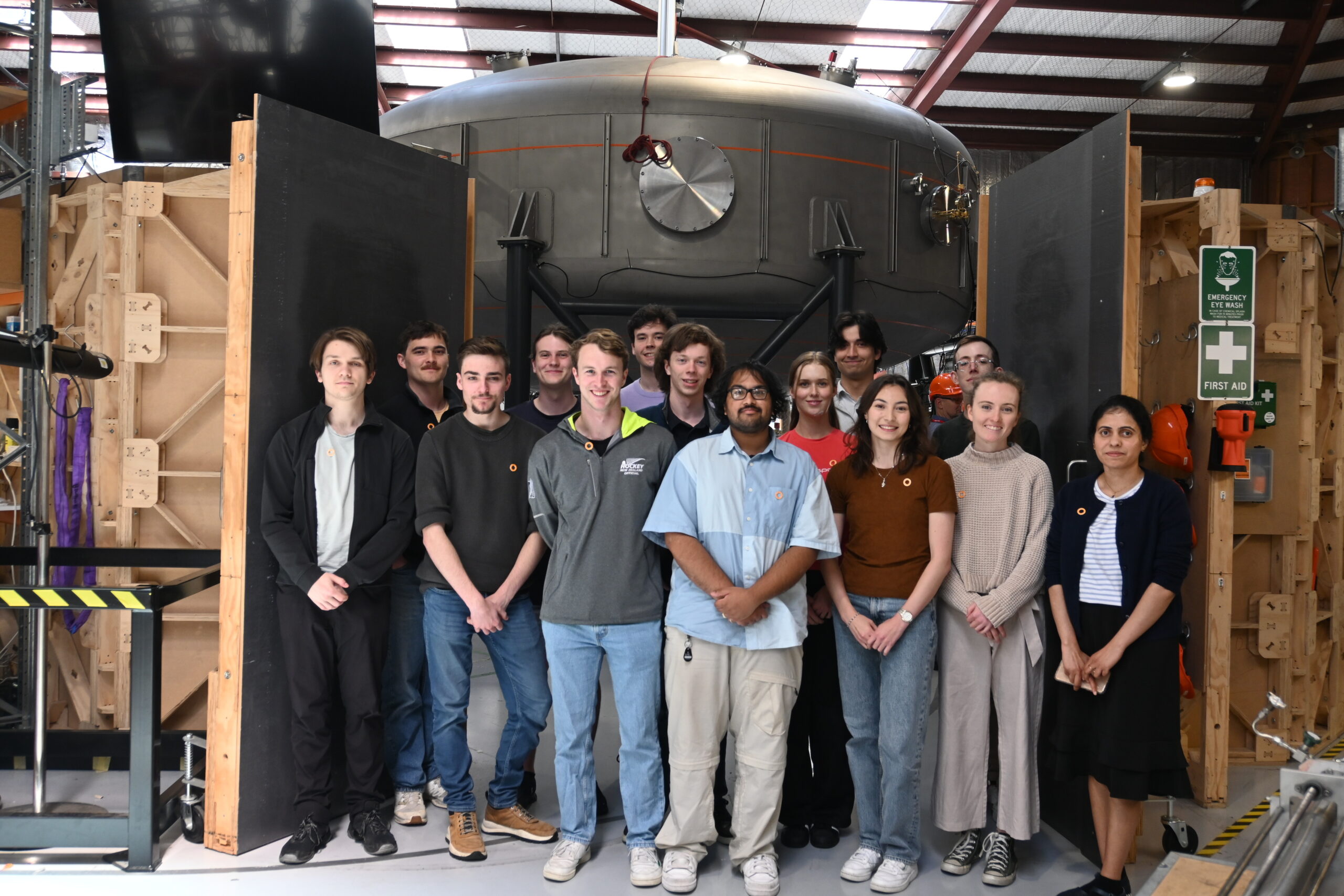
Benjy joined OpenStar Technologies as a summer intern while completing his Bachelor’s degree in physics and computer science at Te Herenga Waka – Victoria University of Wellington. In 2025, he started an Honours degree in physics and by the end of that year, completed his BSc and Honours simultaneously. OpenStar hired him right after university. “I do a mix of theoretical modelling work, data analysis on results collected from plasma experiments, and experimental work on plasma diagnostics, including a diagnostic I made in my internship.”
Look ‘under the hood’
“What kept my interest in physics was that there are so many phenomena in the world that have really simple explanations when you look ‘under the hood’,” says Benjy. “Despite the world being such a complex place, we have managed to develop physical laws which can explain almost every physical phenomenon – effectively allowing us to predict the future.”
The thing that he loves most about physics is that, “you can use the precise nature of mathematics to describe the real world and be able to predict what will happen using that.”
“In the past, the physical world was explained through a combination of qualitative ad-hoc observations, myths and legends, and philosophical arguments. The invention of the scientific method provided a framework for fairly testing a physical theory, and the development of more complex mathematics created the language used to describe those theories.”
Benjy’s venture into the sciences and focus on physics is an example of the importance of being surrounded by great mentors and teachers.“I was inspired to study physics by a great high school teacher of mine, Kent Hogan. From a young age, I was interested in mathematics and programming, and my interest in physics developed when I did my first physics tournament in my first year of high school.”
‘Trust, but verify’
Benjy shares some core principles that guide his academic and professional pursuits.
“A way of thinking I apply daily throughout my work is ‘trust but verify’. I do a lot of theoretical modelling and data analysis, where it is very easy to make a mistake which produces nonsensical results. To catch those, I constantly monitor the outputs, and verify my work along the way,” says Benjy.
“In physics, there are a lot of easy checks that can be made to check whether some result is sensible – lengths are to be positive, the laws of causality should be obeyed, and the ‘solution’ to an equation does indeed solve it. These are the kinds of checks I constantly perform to ensure that the work I do is correct.”
Having navigated a raft of physics competitions himself, Benjy now works to ensure today’s students have the same positive experiences.
“For me, competing in physics tournaments provided an opportunity to try doing physics at a higher level than would be possible in the normal high school curriculum,” says Benjy. “The process of doing experiments, developing a matching theory, and presenting the results to an external audience is much closer to actual research work than typical schoolwork. I found that I really enjoyed that process, which encouraged me to pursue physics at university and as a career.”
Over the past two years, he has regularly jurored at various junior physics tournaments, including the NZYPT, JYPT (Junior Young Physicists’ Tournament – a tournament aimed at years 9-11 for New Zealand and Australian schools), and the Wellington Junior Science Tournament (WJST), a regional tournament aimed at years 9 and 10. Aside from being a juror, he helps organise the WJST. “These junior tournaments are really important because they help students get interested in physics, and competitive physics especially, from a younger age.”
Benjy missed the face to face Physics World Cup in 2022. But he will be joining the New Zealand contingent that will compete this year at the international tournament in Switzerland at ETH Zurich University, where Albert Einstein studied and taught. He is one of two co-leaders who will mentor and supervise the team.

If he were to teach a physics concept to everyone, it would be thermodynamic cycles. Thermodynamic cycles are the process of taking some substance, like gas, and heating it, cooling it, compressing it or expanding it repeatedly, he says. “The neat part is that if you do those steps in a particular order, you have a process which takes heat, and turns it into useful energy, like electricity. Alternatively, you can create a cycle which takes electricity, and can cool down a room.”
He explains this is the concept underlying heat pumps, refrigerators and internal combustion engines. “I learned about this in my first year at university, and I found it fascinating because it seems to defy common sense. How can you take something cold, and somehow make it even colder, when normally the atmosphere is trying to heat it up back to room temperature?”
An introspection: AI and emerging tech
Benjy sees a range of options for those who are interested in a science profession, at a time when AI is impacting jobs across sectors.
“Large language models (LLMs) have made waves in a number of industries, particularly in STEM, where the technology was born out of. They are a tool which I make regular use of in my job as a physicist,” he says.
Work in STEM fields is often a juxtaposition of novel, interesting work, and dull or fairly repetitive work. As someone who is familiar with computer programming, there has usually been a floor on the amount of repetitive work that I have to do. If it is simple but repetitive, then I can just write a script to do it.”
“LLMs are a tool which can help raise the floor. Some of the jobs which are too complex – or not worthwhile – to create a script to do, I can instead use LLMs to solve. This comes back to what I mentioned earlier about verifying information you receive – much of the work in STEM fields requires some kind of logical thinking. If you apply this to the results you obtain from any source (including LLMs), then that can help you distinguish correct and incorrect results. Therefore, I think it is important for people considering a career in STEM to have a base-level understanding of the field or fields they’re working in, and to more importantly think critically about answers they receive,” says Benjy, going back to his earlier adage about deep introspection and constant checking of outputs.
“Ultimately, I would advise people in STEM to stay aware of emerging technologies, spend a few hours playing around with them, decide if or how they could be useful to you, and get an understanding of their advantages and limitations. If you decide it’s not for you, make a note of it and come back in a year or two to see if it’s evolved enough to change your opinion.”
As told to Divina Paredes