
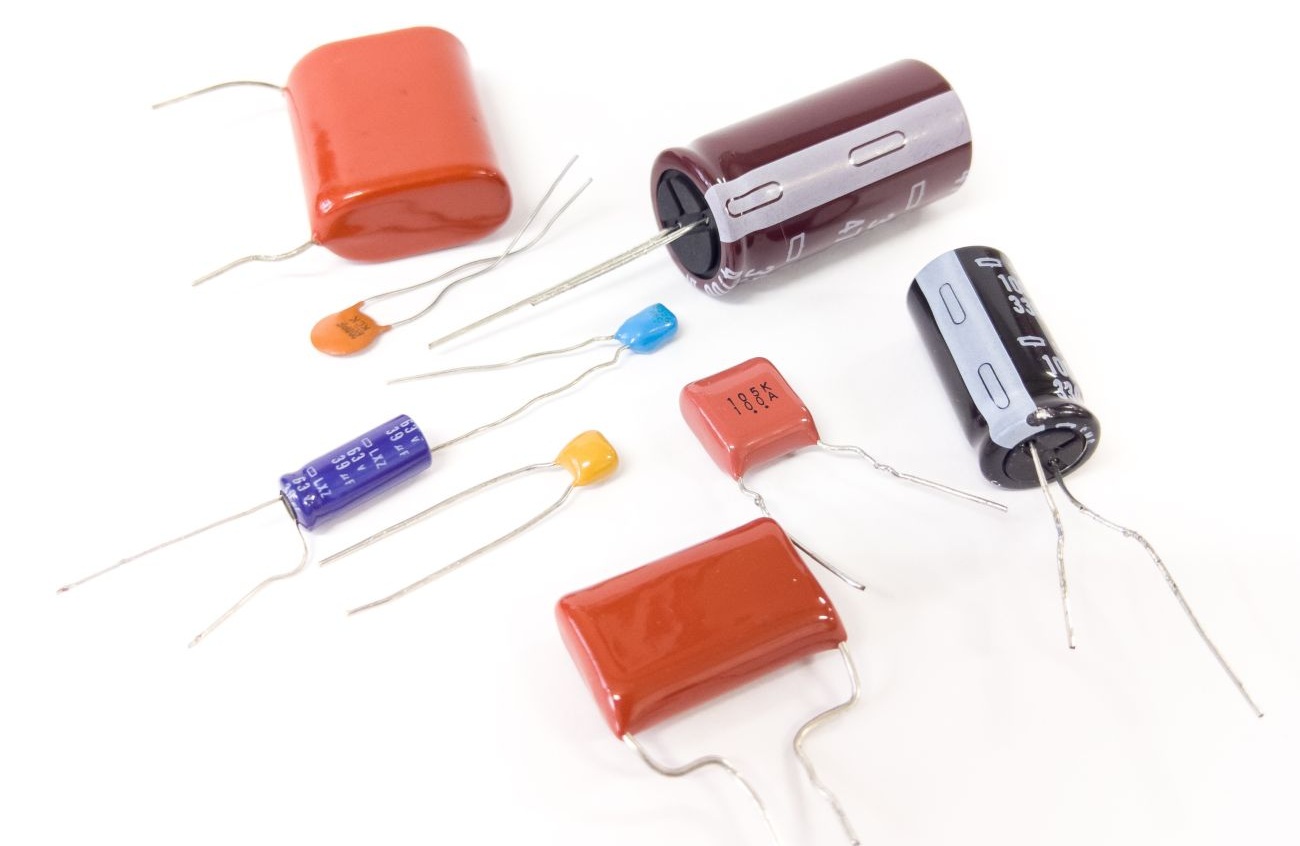
Problem 2: Singing Capacitor
Why do some small electronic capacitors hum when you power them?
For this problem it will be beneficial to work with someone who builds electronic circuits regularly, such as a professional electrical engineer or technician. Or your physics teacher! See if you can start the experiment at the end of term 4 and borrow some of the equipment you need from school.
Problem in full
This is problem 4 of 17 for IYPT 2027
“Certain types of ceramic capacitors emit an audible sound when an alternating voltage is applied across them. Investigate the characteristics of the sound produced and how they depend on relevant parameters, such as voltage, frequency, and capacitor properties.”
Specialist equipment
- Someone already working with electrical components – they should have everything you need!
- Capacitors and ways to connect them
- A multimeter. An electronic measuring instrument that measures voltage (volts), and resistance (ohms), and current (amperes).
- A signal generator. An electronic test instrument that produces repeating electrical waveforms, for example a sine wave, across a controllable range of frequencies and voltages.
Safety first!
- Never carry out electrical work in a damp environment.
- Disconnect all electronic components from the power supply before working on them
- Capacitors store electrical charge and can give you an electric shock if handled incorrectly.
- Always assume a capacitor is charged until you measure or discharge it
- Discharge it safely and slowly through a high-resistance, high-wattage ceramic resistor (typically 10kΩ to 100kΩ). Connect the resistor across the capacitors wires using insulated alligator leads. Wait while the current drains.
- Take care not to short a capacitor by connecting a conductor (including you!) across both wires
- If you use a soldering iron, be aware that these get very hot. Take care not to burn yourself or your worktop.