
Accelerate! – Anthony Greer

Anthony Greer describes his path to becoming an Associate Director in Digital Forensics & eDiscovery in the Risk Services team at PwC NZ as a bit of a happy accident.
As AI ramps up, blending disciplines is the way to go.
Anthony Greer describes his path to becoming an Associate Director in Digital Forensics & eDiscovery in the Risk Services team at PwC NZ as a bit of a happy accident.
“I actually didn’t know digital forensics was a career option while I was at university,” says Anthony, who initially studied mechanical engineering before shifting to statistics and computer science.
This interdisciplinary education – combining mechanical engineering, statistics and computer science – was a great fit for Anthony. “I’ve always liked understanding how things work fundamentally, which is what drew me to mechanical engineering. Moving into stats and computer science let me apply that same thinking to data and computing.
Collaborating and ‘geeking out’ over tricky problems
In high school, Anthony joined tournaments run by the NZ Young Physicists’ Trust (NZYPT), which then led him to join the New Zealand team that competed at the International Young Physicists Tournament in Chinese Taipei in 2013. The team placed 6th out of 26 teams, and won silver medals.
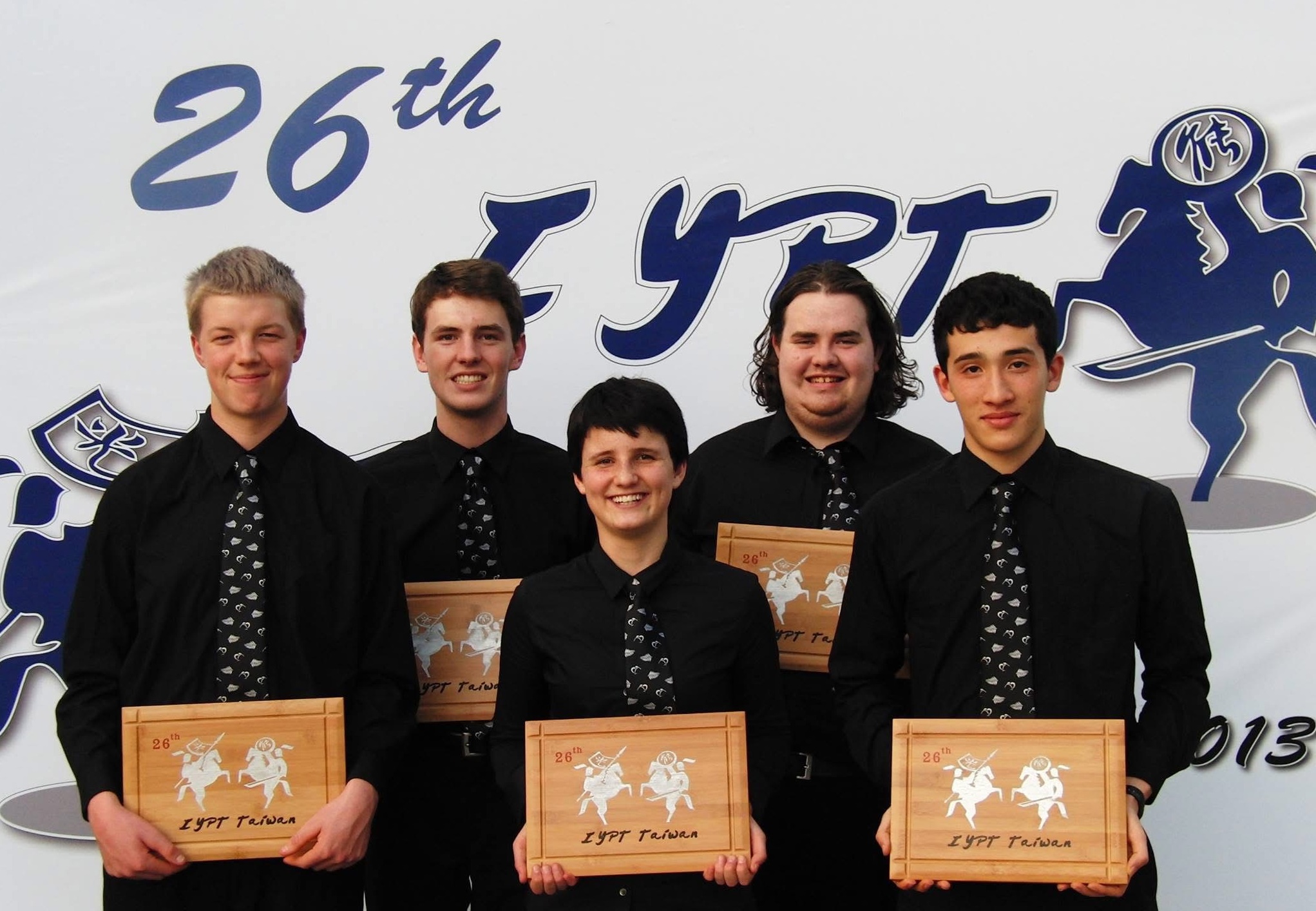
IYPT, also known as the Physics World Cup, gets teams into a ‘Physics Fight’, where students carry out practical and theoretical research to solve a problem and then explain it in real-time before other students and judges. And just as important, there are no Googleable answers to the problem.
After high school, Anthony studied mechanical engineering at Boston University and returned to New Zealand to finish a Bachelor of Science in Statistics and Computer Science at the University of Auckland. “I really enjoyed it, but after a year in, I was offered a chance to do some hands-on IT rollout and consulting work back in Auckland.”
“Don’t be afraid to combine subjects – some of the best opportunities blend disciplines across science, business, and law”
He managed the transition: “Juggling contracting work with my degree was a lot at times, but it ended up being a great way to ground what I was studying in real-world practice.”
“I had my computer science background, a hobby of tinkering with PC hardware, building crypto mining rigs during the ‘mining rush’ of 2017 to 2021, and the problem-solving experience from case competitions.”
His past experiences at NZYPT and IYPT tournaments led him to the University of Auckland (UoA) Case Club. The club runs annual consulting and business case competitions, where students from different courses work on real-world business problems and pitch strategies to industry judges. “That’s where I met a lot of like-minded people who enjoyed collaborating and ‘geeking out’ over tricky problems.”
“I am grateful to the people behind NZYPT and IYPT, both programmes were hugely formative for me,” said Anthony. “The two events brought together debating, collaboration, and physics in a really interesting way.”
“The constructive peer review element – defending your own work while also pointing out the strengths in another team’s approach – definitely shaped my career. Learning how to explain technical findings and answer probing questions from judges was excellent training for what I developed further through the university case programme and in my career reporting and presenting on digital forensic evidence.”
Into the Digital Forensics Lab
When a professional services firm offered him a role as a forensic analyst in 2018, it felt like a natural fit. “The investigative side of the job – trying to discern chronologies and artifacts across digital systems, paired with forensically extracting data from devices – just clicked with me.”
Moving to PwC earlier this year, Anthony still relies daily on the core principles of physics from his student days. “Basic scientific principles come into play all the time on the job. When we look at a cyber incident or a collection of digital evidence, we have to strip it back to the basic component layers to understand it. Hypothesis testing is a frequent exercise: we form a hunch about how data was transferred or deleted, validate it against the digital logs, and make sure our working is accurate and reproducible so it holds up under scrutiny.”
Giving Back and Looking Ahead
Science has led him to a dynamic career, and Anthony gives back to the community that nurtured his academic interests. “I have served and continue to volunteer on judging panels for past NZYPT tournaments, the Oceania Case Competition, and the UoA Open Case Competition. It’s always great to see students developing their analytical and presentation skills in these programmes.”
On the impact of AI across sectors and careers, he said: “AI is an incredibly powerful tool for parsing large volumes of data and writing code, but it doesn’t replace the need to know what questions to ask in the first place. My advice would be to focus on learning how to think critically and how to verify information. Also, don’t be afraid to combine subjects – some of the best opportunities blend disciplines across science, business, and law.”
Anthony believes a science background is always valuable. “Studying science gives you a useful framework for looking at the world. Whether you’re working in digital forensics or something else entirely, a science background teaches you how to break down a messy problem into manageable pieces and find a logical path forward.”
As told to and written by Divina Paredes