
How to investigate an IYPT problem
It can be daunting to start an investigation when there are no instructions. But here is an outline of the process that can be applied to all of the 17 problems.
- Identify the phenomenon that the problem describes and what physics causes it to take place. There is likely to be more than one physics topic involved, for example, gravity and waves. These theories may be outside of your school physics curriculum.
- “Identify the variables.” Break the problem down into the different physics features causing the phenomenon; for example, mass, brightness, size or speed. How does changing the value of variables change the phenomenon?
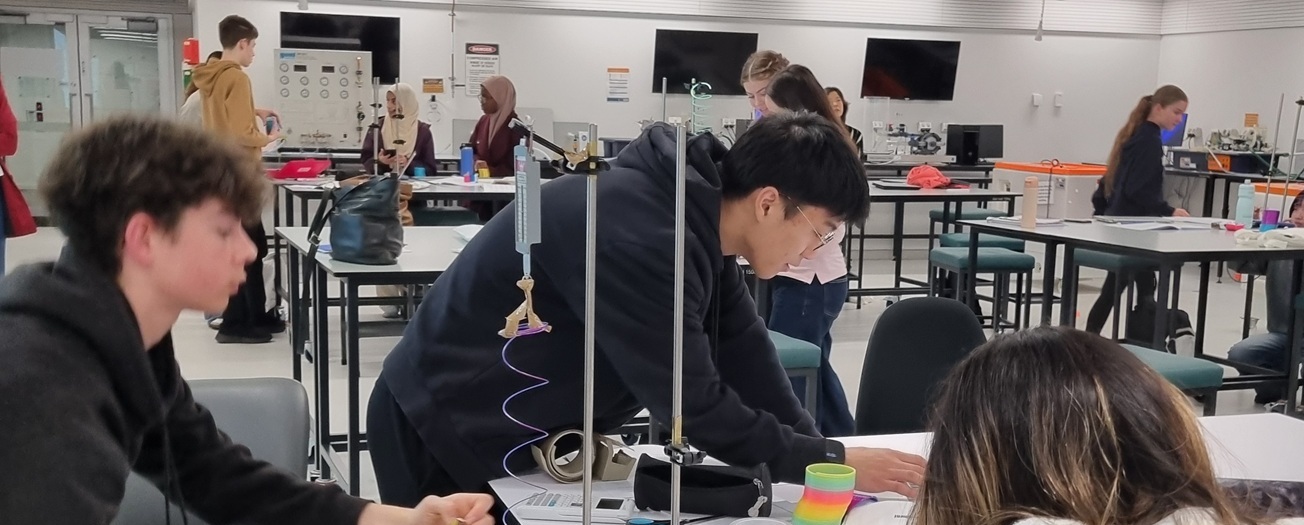
- Design, build and carry out (a series of) experiments that
- reproduce and record the phenomenon, and
- allow you to take reliable and precise data readings, and
- allow you to investigate the variables and how changing variables, changes your results, and
- show that you any assumptions you make are correct.
- Analyse the data mathematically and represent it graphically. If possible, use a spreadsheet to help manipulate and plot data easily.
- Propose a theory or explanation for the phenomena by combining theory from the various physics topics involved. If possible, model this mathematically and/or digitally.
- Discuss where your model’s theoretical predictions differ from your experimental data. It is rare that theory perfectly fits experimental data.
- Refine your experiments by repeating repeat steps 1 to 6
- Prepare a PowerPoint presentation of your work to use on Tournament Day. You will need to include
- Good quality photos and videos that clearly show your key points
- References for facts and information NOT obtained from your experiments.
- Acknowledge who has helped you and how.
- Details of where you have used technology, (aka experimental equipment), including AI, to assist your research.
- Practice giving your presentation to real people, using their feedback to improve it.
Remember: All of this needs to be done well BEFORE Tournament day!